
GBR using Ice Cream Cone Technique.



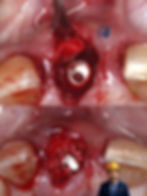


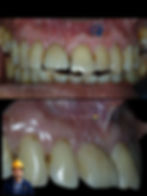


When faced with a fresh extraction socket and a compromised labial plate (class 2),the goal is simple but challenging: regenerate bone and manage soft tissue without extensive flap reflection or primary closure.
The Procedure
Relatively Atraumatic Extraction done.
The buccal plate was compromised.
Implant was placed palatally.
As the buccal plate was compromised .we utilized the Ice Cream Cone Technique to reconstruct the buccal defect:
1. Membrane Preparation: A resorbable collagen membrane is trimmed into a “v” or “cone” shape (the “cone”).
2. Placement: The membrane is tucked palatally and looped over the buccal defect, creating a “pouch” to contain the graft material.
3. Grafting: The “cone” is filled with bone particulate (the “scoop of ice cream”) to maintain the ridge contour.
Why it Works: The Linkevicius Connection
As seen in the final clinical slides, the focus is on achieving a “Beautiful Gingival Cuff.”
• Vertical Soft Tissue Thickness: Following Linkevicius et al. (2009), we aim for 3mm of vertical soft tissue. This acts as a protective barrier, ensuring that biologic width formation occurs coronal to the bone level, effectively preventing crestal bone loss.
• Keratinized Width: Maintaining at least 2mm of attached gingiva is crucial for long-term peri-implant health and stability.
Key Takeaway
By avoiding flap elevation, we maintain the blood supply to the thin buccal plate or no buccal plate and maximize the regenerative potential of the socket.
The result? A robust emergence profile and stable crestal bone.
Clinical Credits: Dr. Anuj Gandhi 🇮🇳
Literature: Linkevicius T1, Apse P, Grybauskas S, Puisys A. 2009.
Ice cream cone technique- Elian et al ,Dennis tarnow
#DentalImplant #Periodontics #IceCreamConeTechnique #gbr