IS-II Implant Placement with Guided Bone Regeneration Using CTi-mem: A 13-Year Follow-Up Case


Case Summary 🔎
Patient Information
•Age/Gender: 52-year-old, Female
•Past Medical History: Healthy
•Drug allergy: None
•Chief complaint: "I have the missing teeth on the upper front area."
Introduction
This case presents a 52-year-old male patient who underwent implant placement in the maxillary anterior region (#23) with simultaneous guided bone regeneration (GBR) using CTi-mem, a titanium mesh. An IS-II implant was placed, and the CTi-mem was used to stabilize the grafted bone and maintain the desired contour. The titanium mesh was removed three months after surgery, followed by prosthetic rehabilitation. Clinical and radiographic follow-up was performed over a period of 13 years, demonstrating stable peri-implant bone conditions and favorable long-term outcomes.
Treatment Plan
Placement of CMI IS-II implant at site #23
Simultaneous guided bone regeneration (GBR) using CTi-mem (titanium mesh)
Removal of the CTi-mem 3 months after surgery
Delivery of the definitive restoration
Annual clinical and radiographic follow-up
Case Presentation
1️⃣ Pre-Op
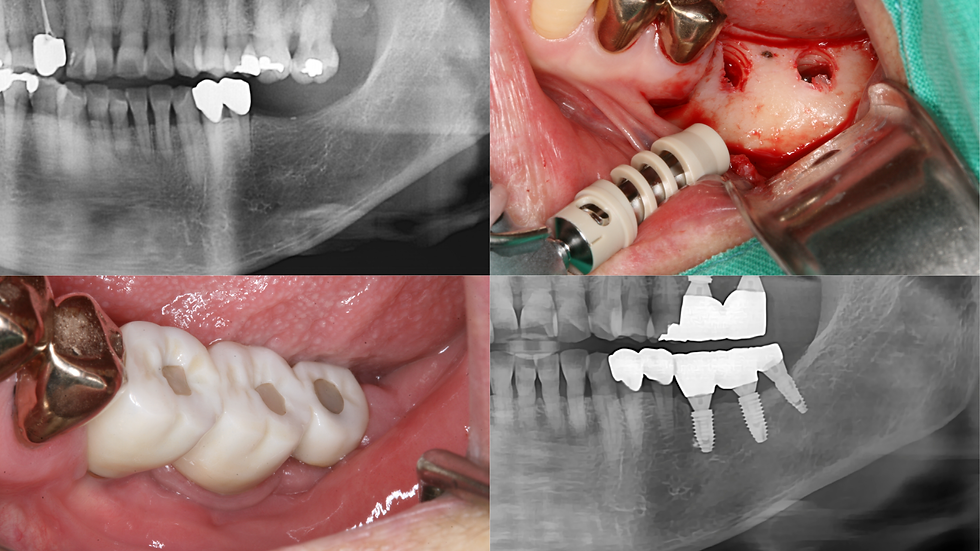
Pre-operative radiograph and intraoral photograph shows well-healed alveolar ridge.


2️⃣ Surgery
Flap elevation was performed, revealing insufficient buccal bone.

A CMI IS-II implant (Ø4.0 × 10 mm) was placed at site #23. Due to insufficient buccal bone, the buccal aspect of the implant was exposed.
Bone grafting was performed using allogenic bone.

The CTi-mem (B1) was contoured and secured to the implant at the surgical site.
Primary closure was achieved with suturing to prevent exposure of the CTi-mem.
Post operative panoramic radiograph (May 23, 2011)

Sutures were removed two weeks postoperatively, and the soft tissue showed uneventful healing.
The CTi-mem was removed 3 months after surgery.
The healing abutment was connected.
3️⃣ Final Restoration
The definitive prosthetic restoration was fabricated.
Definitive prostheses were delivered 1 year after surgery. (June 29, 2012)
4️⃣ Periodic follow-up (April 2013 – March 2025)
Annual panoramic radiographs were taken consecutively from April 2013 to March 2025.


From May 2011 to March 2025, annual follow-up evaluations showed stable long-term maintenance with no evidence of bone loss.
Summary
This case demonstrates favorable long-term outcomes of guided bone regeneration using CTi-mem in conjunction with IS-II implant placement. The regenerated bone area maintained stable volume and contour for more than 13 years without evidence of resorption. In addition, the IS-II implant showed excellent long-term stability with no marginal bone loss throughout the follow-up period. These findings suggest that CTi-mem–based GBR can provide predictable and durable results, supporting long-term implant success.


Comments