Posterior Mandibular Implant Case with Autogenous Bone Grafting and Long-term Follow-up

Updated: Feb 5

Case Summary 🔎
Patient Information
•Age/Gender: 56-year-old, Female
•Past Medical History: No systemic disease reported
•Drug allergy: None
•Chief complaint: "It is difficult to chew the food due to missing molar teeth."
Introduction
Rehabilitation of the posterior mandible with dental implants is a predictable treatment modality; however, long-term stability depends on adequate primary fixation, proper bone management, and prosthetic accuracy. In cases of multiple missing molars, restoration of posterior support is essential for functional mastication and overall patient satisfaction.
This case presents implant-supported rehabilitation in the mandibular left posterior region (#36,#37,#38) of a 56-year-old female patient with no systemic disease or drug allergy. Following implant placement combined with localized bone harvesting using an autogenous chip maker and guided bone regeneration, stable osseointegration was achieved.
The implants were restored with fixed prostheses, and the patient has been followed radiographically and clinically for up to 10 years. This report demonstrates favorable long-term outcomes with maintained marginal bone levels and stable function, highlighting the predictability of implant therapy in the posterior mandible when appropriate surgical and prosthetic protocols are applied.
Treatment Plan
Case Presentation
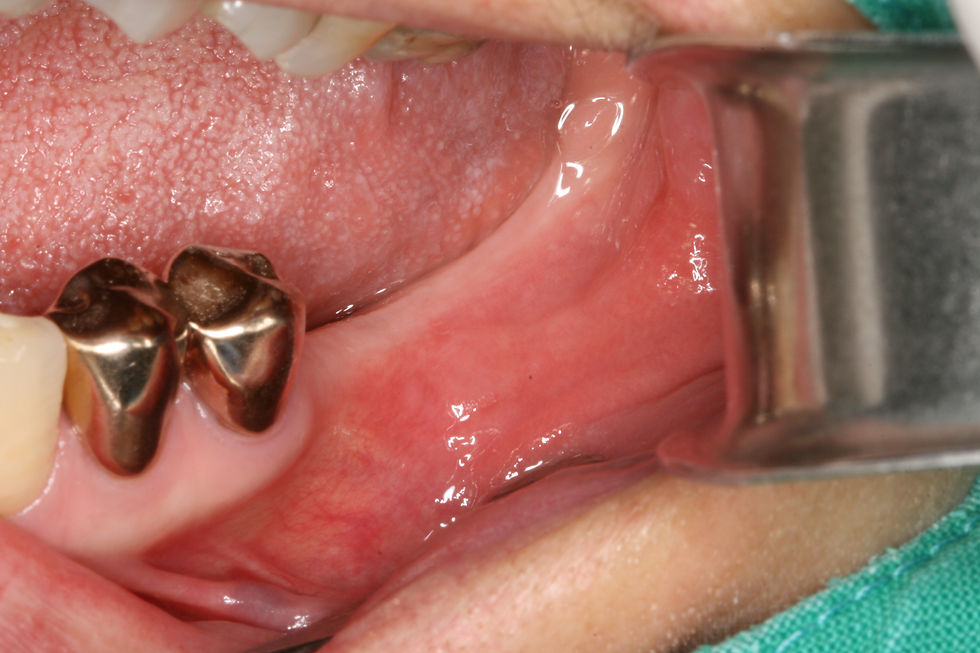
1️⃣ Pre-Op (#36, 37, 38)
Multiple missing molars are noted, resulting in insufficient posterior support and compromised masticatory function

2️⃣ Surgery
A full-thickness flap was elevated to gain surgical access to the edentulous posterior mandibular sites for implant placement.
After completing the sequential drilling and osteotomy preparation, autogenous cortical bone was harvested from the buccal side using an ACM bur.
Autogenous bone chips harvested using the ACM bur were collected and prepared for grafting.
IS-II implants were placed at #36 (5.0×10 mm), #37 (5.0×10 mm), and #38 (3.5×8 mm), achieving 35 N/cm insertion torque in D144 bone.
After implant placement, a barrier membrane was applied to cover the grafted area, providing stabilization of the graft material and promoting guided bone regeneration prior to flap closure.
The flap was repositioned and sutured to achieve primary closure, ensuring protection of the grafted area and stable healing.
At the 1-month follow-up, patient visited for uncovery and soft tissue healing was observed with stable and healthy mucosal contours.
Flap elevation to uncover the implants during the second-stage surgery
Healing abutments were connected after implant uncovering
3️⃣ Final Restoration
Final restoration was delivered 3 months after implant placement, showing stable peri-implant soft tissue and proper occlusal morphology.

4️⃣ Periodic follow-up (Mar, 2014 – Jan, 2024)
Annual panoramic radiographs were taken consecutively from March 2014 to January 2024.


Following final restoration delivery in 2014, the implants were monitored with regular panoramic radiographs until January 2024. Over the 10-year follow-up period, the implants remained stable with no significant marginal bone loss observed. The patient reported satisfactory function and comfort, demonstrating a predictable long-term outcome.
Conclusion
This case demonstrates successful implant rehabilitation in the posterior mandible using autogenous bone harvesting with guided bone regeneration. Stable primary fixation was achieved at all implant sites, followed by favorable soft tissue healing and prosthetic restoration.
Long-term clinical and radiographic follow-up from 2014 to 2024 confirmed stable peri-implant bone levels without significant bone loss. The patient reported sustained functional comfort and satisfaction, highlighting the predictability and long-term stability of implant therapy in the posterior mandible when appropriate surgical and regenerative protocols are applied.


Comments